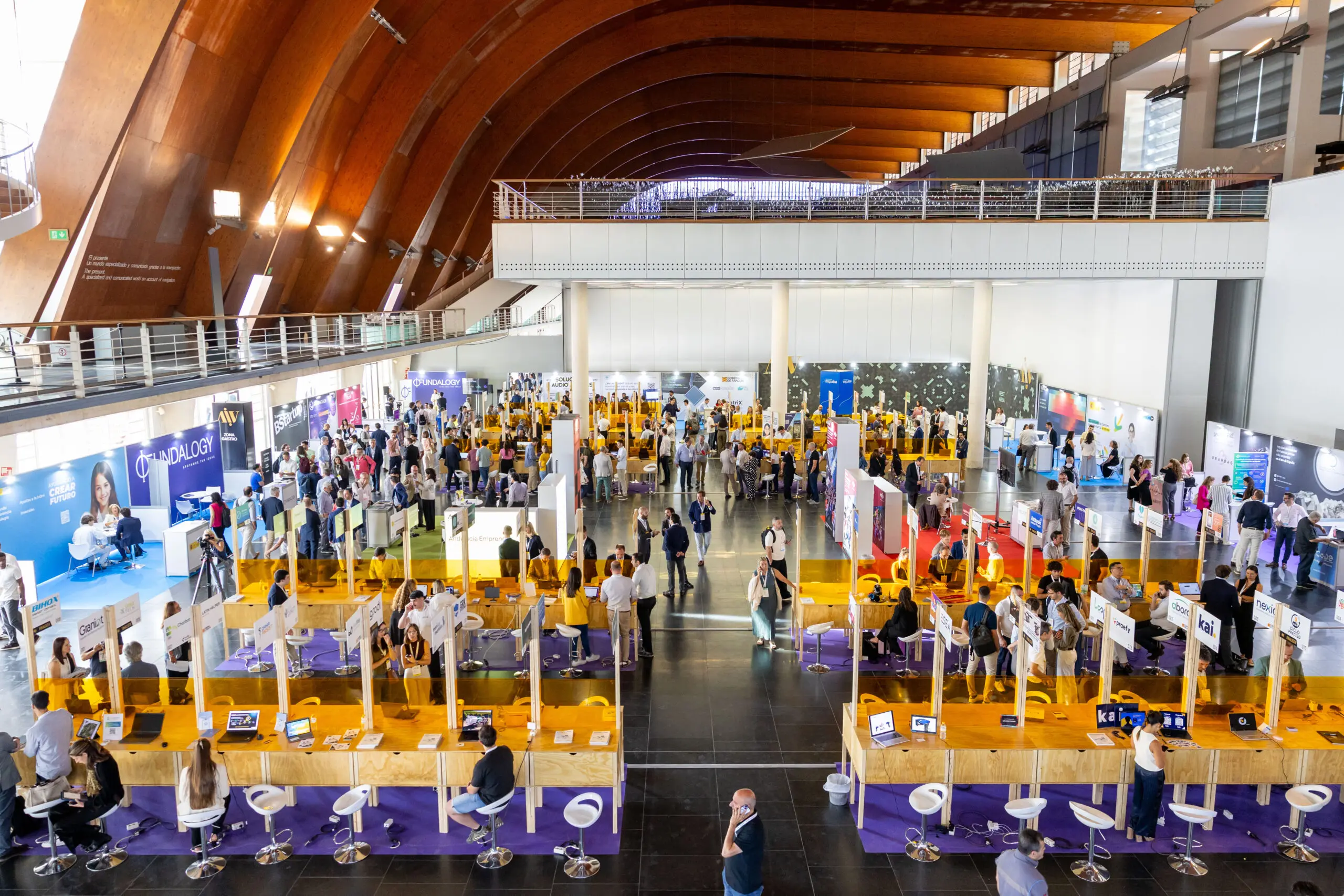
A trade show is a strange system when you look at it from the outside. Buyers walk the aisles for hours hoping to bump into the right supplier. Exhibitors pay for a stand and hope the right buyer walks past. The hard part is not the conversation. It is the finding each other part, and most of it is left to chance.
The teams that get the most out of an event do not leave it to chance. They do the homework in the weeks before and arrive with meetings already in the calendar. Walking into the show with ten meetings booked beats scanning two hundred badges and hoping. This article explains how to get there, from the exhibitor list to the message and the route through the hall.
Why Booking Beats Walking
Three reasons, all of them practical.
Decision makers fill their agenda before the show. If your first contact happens in the aisle, you are behind everyone who wrote a month earlier, and the person you want is in a meeting with them.
On the floor, everyone has talked to too many vendors to remember any of them. A meeting booked in advance, with a reason and a time, is a conversation the other person has chosen to have. A walk-up is one they have to endure.
And your team’s time is the scarcest resource at the event. A rep who has fifty meaningful conversations over three days is having a good show. Booking a third of those in advance means the rest of the time goes to the floor with a plan instead of a wander.
Step 1, Get the List of Companies
Everything starts with knowing who will be there. The exhibitor directory is the obvious source, but it is often published late, incomplete, or built so that it cannot be exported. Attendee lists are harder still, and for many events they do not exist in any usable form. We cover the sources, what is realistic to get and what is not in our guide on getting the exhibitor and attendee list of an event.
Whatever the source, the goal of this step is a list of company names with a website. Everything else can be added later.
Step 2, Pick Twenty to Thirty Targets, Not Two Hundred
The mistake at this stage is trying to contact everyone. A list of two hundred exhibitors is not a plan. It is a spreadsheet.
Define what a good fit looks like for this event, using your ideal customer profile. Sector, company size, country, and whether the problem you solve is relevant to what they do. Score every company on the list against those criteria, and keep the top twenty or thirty. Those are the accounts worth a personal message. The rest stay on the list for the floor.
Doing this by hand for a few hundred companies takes days. It is the part of the process that tools, including ours, are built to shorten. But the principle does not depend on tools. Fewer, better targets.
Step 3, Find the Right Person
The people staffing a stand are often not the people who decide. For each target company, look for the person who owns the problem you solve, or the person who would sponsor a purchase. A professional network search on the company plus a role usually gets you there in a couple of minutes. If the company has announced who will attend, use that.
If you cannot find the right person, the stand contact is still a valid door. The message just changes, from “let’s talk about your project” to “who on your side should I talk to about this”.
Step 4, Write the Message
The message should be short, mention the event as the reason, and ask for something small. Three or four weeks before the show is the right window. Earlier and it gets forgotten. Later and the agenda is full.
Subject: Meeting at the show on the 14th?
Hi Elena, I saw that your company is exhibiting at the show next month. We work with teams in your sector on the problem of researching exhibitors before each event, and I think there may be a good fit. Would you have fifteen minutes at your stand on the 14th or 15th? I am happy to come to you at whatever time is quiet for you.
Professional network message
Hi Elena, I noticed you will be at the show next month. We help teams like yours prioritize which companies to meet before an event. Would you have fifteen minutes at your stand for a quick conversation? I am flexible on the day and time.
Two things make these work. The event is the reason, so the message does not read as cold outreach. And the ask is small, fifteen minutes at their own stand, at a time they choose.
Send a second message about a week before the show to those who did not reply. Keep it to two lines.
Realistic numbers. Around a third of the people you write to will reply, and most of those will say yes. Twenty five messages become seven to ten meetings. That alone changes the outcome of the event.
Step 5, Build the Route
With the meetings confirmed, lay them out on the floor plan. Group them by hall and by day so you are not crossing the venue every hour. Put the unconfirmed targets from your list on the same map, so that when you are near one of them you can walk up with context.
A quiet stand is a receptive stand. The first hour of the morning, the lunch break and the last afternoon of the show are when people have time to talk. Plan the walk-ups for those windows, and the confirmed meetings for the busy hours, when a booked slot protects you from the crowd.
Step 6, What to Do When They Do Not Reply
Most of your targets will not answer. That is fine, because the message has already done part of the work. When you walk up to their stand and say “I wrote to you a couple of weeks ago about the show, I am glad I caught you”, you are no longer a stranger. The context is there, and the conversation starts further along than a cold walk-up.
For those who never replied and whose stand you could not reach, the follow-up after the event starts from the same context. It is a warmer email than the one that follows a badge scan.
What This Does to the Rest of the Event
Booking meetings in advance changes how the rest of the show is worked. The confirmed meetings are the ones you qualify most carefully, because the fit is already established and only the interest needs confirming. The walk-ups on your target list are the second tier. Everyone else who stops at your stand is the third, and gets the time that is left.
If you want the whole picture, from preparation to follow-up and measurement, our complete guide to trade show lead generation covers each phase, and the week by week preparation checklist puts the steps above on a calendar.
At DataOrigin we do the part of this process that takes the longest by hand. We identify the companies exhibiting and attending each event, enrich them with sector, size, country and website, and score them against your ideal customer profile, so you start the outreach weeks before the show with the right twenty or thirty names already in front of you.
Explore our event directory or contact us to see what your target list for the next show would look like.