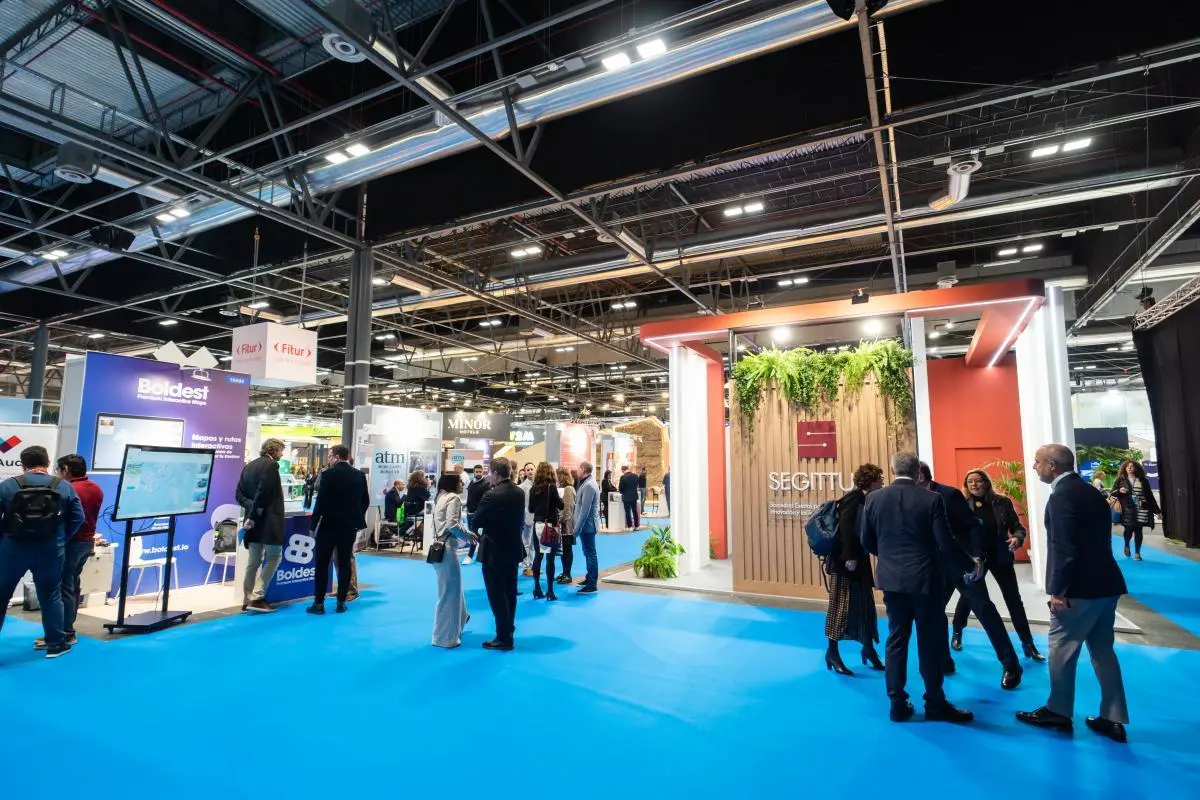
Tourism is one of the sectors with the longest trade show tradition, and its events are a key meeting point for the entire travel ecosystem. Tourism fairs gather destinations, hotels, tour operators, agencies, and technology providers around product, contracting, and trends. For a company that sells to the sector, an event concentrates decision-makers who would be very hard to gather any other way in just a few days.
It is a highly seasonal sector with a very structured buyer-seller dynamic, where choosing the right moment and type of day makes the difference. This guide goes over what types of events exist, who you will meet, and how to prepare your presence so it turns into opportunities.
Upcoming Trade Shows in the Sector
The sector’s next dates, each linking to its guide. The table refreshes daily.
| Trade show | Dates | City |
|---|---|---|
| Fitur 2027 | 20–24 Jan 2027 | Madrid |
| Tourism Innovation Summit 2026 | 6–8 Oct 2026 | Seville |
| Solutions Cse Montpellier 2026 | 1–2 Oct 2026 | Montpellier |
| Uitm 2026 | 1 Oct 2026 | Kyiv |
| Salon International Du Tourisme De La Côte D’Azur 2026 | 3–4 Oct 2026 | Cannes |
| Independent Hotel Show London 2026 | 5–6 Oct 2026 | London |
| Salon Atlantica 2026 | 6–8 Oct 2026 | Niort |
| Mtec.Kiev 2026 | 7–9 Oct 2026 | Kyiv |
| Poland Boat Show 2026 | 8–11 Oct 2026 | Warsaw |
| TT Warsaw 2026 | 8–11 Oct 2026 | Warsaw |
What Types of Events Exist in the Sector
The sector brings together different formats depending on the audience and the goal.
- Large tourism fairs. The main showcase, with destinations and companies presenting their offering to professionals and, on certain days, to the public.
- B2B and contracting events. Focused on closing deals between travel buyers and sellers, often with fixed meeting agendas.
- Specialized shows. Geared toward a specific segment, such as luxury travel, MICE, rural, or adventure.
- Travel technology events. Focused on distribution, bookings, and the sector’s digitalization.
What Attendee Profile You Will Find
At these events you will run into tour operators, hotel leads, travel agencies, destination representatives, and travel technology profiles. It is an audience that comes to contract product, compare offerings, and build the relationships that sustain the next season.
The buyer-seller dynamic is very pronounced. Many fairs use hosted buyer programs where meeting times are set in advance, so the prior agenda shapes much of the outcome.
What Works in This Sector
- Know whether the day is B2B or B2C. Many fairs open to the public on certain days, which dilutes the quality of professional networking. Attend on the professional days and reserve your time for decision-makers.
- Pre-schedule the meetings. The best slots fill up before the event. Arriving with a closed agenda is what separates a profitable show from a walk between stands.
- Well-told product sells. Destination, experience, and differentiation matter. A clear narrative makes your offering stand out among hundreds of proposals.
- The relationship spans several years. In tourism, contracting relies on trust built edition after edition.
What to Watch Out For
Seasonality is a hallmark of the sector and contracting cycles follow the booking calendar. Choosing the right time to attend relative to those cycles greatly influences the outcome.
On top of that, if you are not registered in the buyer or seller program, you can miss the most valuable networking opportunities. It is worth understanding in advance how each fair works.
How to Prepare a Tourism Event
Before you travel, it is worth knowing which companies will be there and which ones match your ideal customer profile, gathering that information with time to spare, since getting the attendee list is the most labor-intensive part, and arriving with scheduled meetings. Our trade show preparation checklist works as a step-by-step guide.
Find and Prioritize the Right Companies
The challenge in the tourism sector is not a lack of events, but arriving at each one knowing which companies are worth seeing. Among thousands of attendees with very different profiles, time slips away locating the ones that genuinely fit you.
At DataOrigin we solve that by identifying, for each event in the sector, which companies match your ideal customer profile by sector, size, and country. So you arrive with a prioritized list and spend the show days on the conversations that matter.
This guide is part of our series on business events by sector. Explore our event directory or contact us to see how to prepare your next tourism and travel fair with data on your side.