Food and beverage have some of the largest trade shows in the world by exhibition space. It is a sector with a deeply rooted trade show culture, where producers, distributors, retailers, and industry suppliers gather every year. For a company that sells in this space, an event concentrates buyers who would be very hard to gather any other way in just a few days.
It is a relationship-driven sector, where trust is built across several editions and where product tasting is still the best argument. This guide goes over what types of events exist, who you will meet, and how to prepare your presence so it turns into orders.
The Best Food and Beverage Trade Shows in 2026 and 2027
These are the sector’s upcoming dates, ordered by the size we know for each one. Exhibitor numbers come from our platform and are refreshed daily.
| Trade show | Dates | City |
|---|---|---|
| SIAL Paris 2026 | 17–21 Oct 2026 | Paris |
| Fruit Attraction 2026 | 6–8 Oct 2026 | Madrid |
| Conxemar 2026 | 6–8 Oct 2026 | Vigo |
| Fresh Food Logistics 2026 | 6–8 Oct 2026 | Madrid |
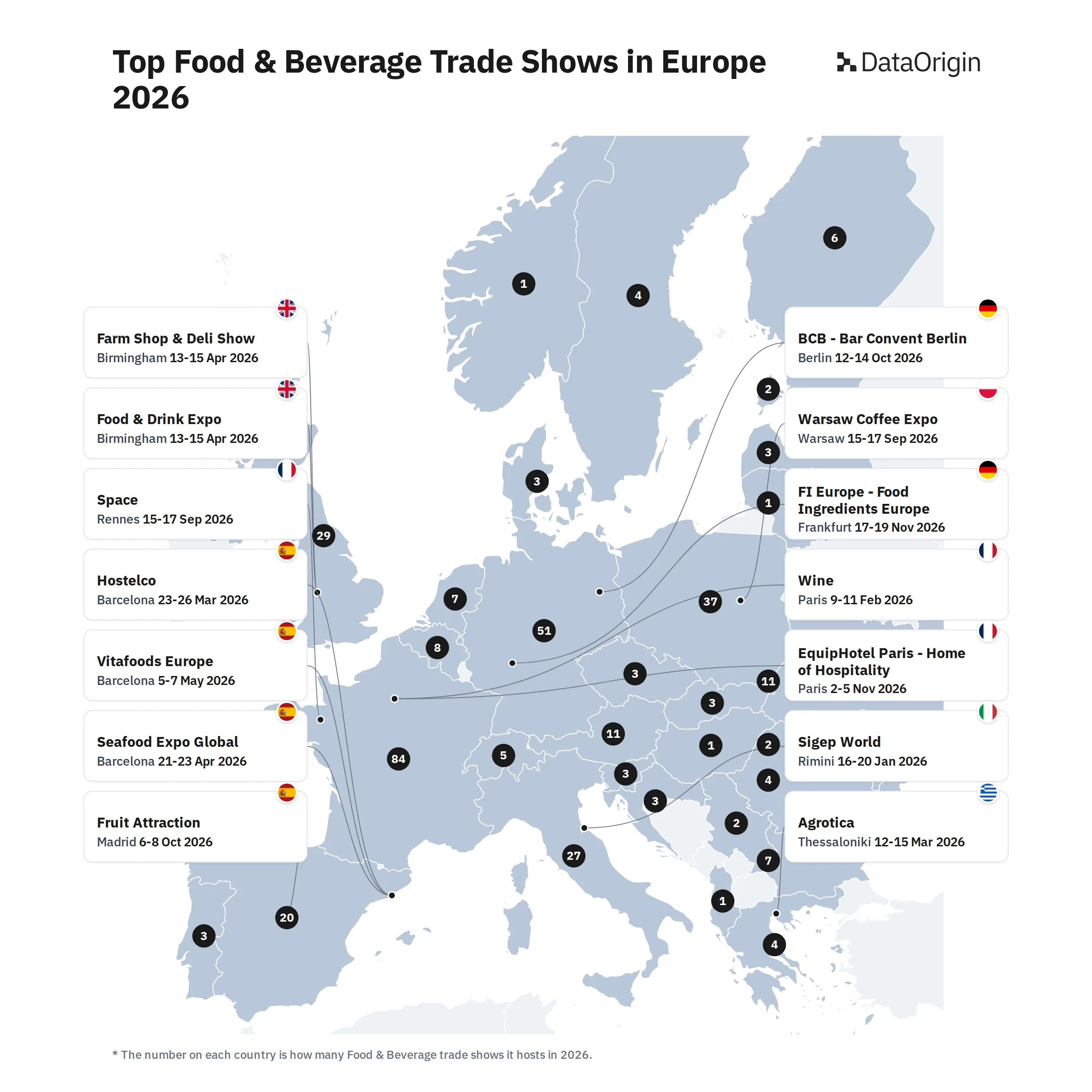
Fruit Attraction 2026, the Fresh Produce Giant in Madrid
October 6 to 8 at IFEMA. It is the world’s reference trade show for the fresh produce industry and one of Spain’s largest food fairs. We identified over 2,300 exhibiting companies at its 2025 edition, and 2026 is set to top it. If you sell fresh produce, machinery, packaging, or logistics for this industry, it is the must-attend stop of the autumn.
Conxemar 2026, Frozen Seafood in Vigo
Also October 6 to 8. Conxemar gathers the frozen seafood industry in Vigo, from shipowners to large-scale distribution, with a strong international presence. It is a pure-business show, with agendas that fill up weeks before the event.
Natexpo 2026, Organic Products in Lyon
September 28 and 29. The French organic trade show is the gateway to the European organic market, one of the fastest growing. The buyer profile is sharply defined across specialist stores and organic distribution.
Terra Madre Salone del Gusto 2026, Turin
September 24 to 28. Organized by Slow Food, it blends trade show and gastronomic movement. It suits artisan producers and brands with a story looking for international visibility rather than immediate order volume.
Speciality & Fine Food Fair 2026, London
September 15 and 16. The British gourmet show, compact in floor space but attended by premium retail and hospitality buyers from across the UK. A good first step to export into that market.
Fruit Logistica 2027, Berlin
February 3 to 5. The other major global fresh produce show alongside Fruit Attraction, with close to a thousand exhibitors identified at its latest edition and a more Central European buyer profile.
Two giants stay off this list because we do not cover them on the blog yet, though they belong on your radar. SIAL Paris, which alternates years with Anuga in Cologne, where we identified over 8,200 exhibiting companies in 2025 and whose next edition arrives in October 2027.
What Types of Events Exist in the Sector
The sector brings together different formats depending on the audience and the type of product.
- Large food trade shows. Massive, with all kinds of products and national and international buyers. They are the sector’s main showcase.
- Specialized fairs. Focused on a specific category, such as gourmet, organic, meat, or beverages. The audience is more relevant and the conversation deeper.
- Hospitality and distribution fairs. Geared toward the horeca channel and retail, where supply deals are closed.
- Food technology events. Focused on machinery, packaging, and processes, with a more industrial profile.
What Attendee Profile You Will Find
At these events you will run into procurement managers from chains and distributors, importers, product heads, horeca leads, and industry professionals. It is a practical audience that wants to see, taste, and compare products before deciding.
Internationality is a hallmark of the sector. Many of the best opportunities come from buyers from other countries who attend to source products, which means preparing your communication for a diverse audience.
What Works in This Sector
- Product tasting rules. Samples and tastings generate stand traffic and create recall. It is the sector where letting people try the product is still the most effective approach.
- Consistency builds credibility. Relationships consolidate by attending the same events for several years. If you are entering this space, commit to a sustained presence.
- Prepare for the international buyer. Materials and arguments adapted to several markets make the difference with visitors from abroad.
- Channel fit matters. Knowing whether your counterpart is retail, horeca, or distribution completely changes the conversation and the proposal.
What to Watch Out For
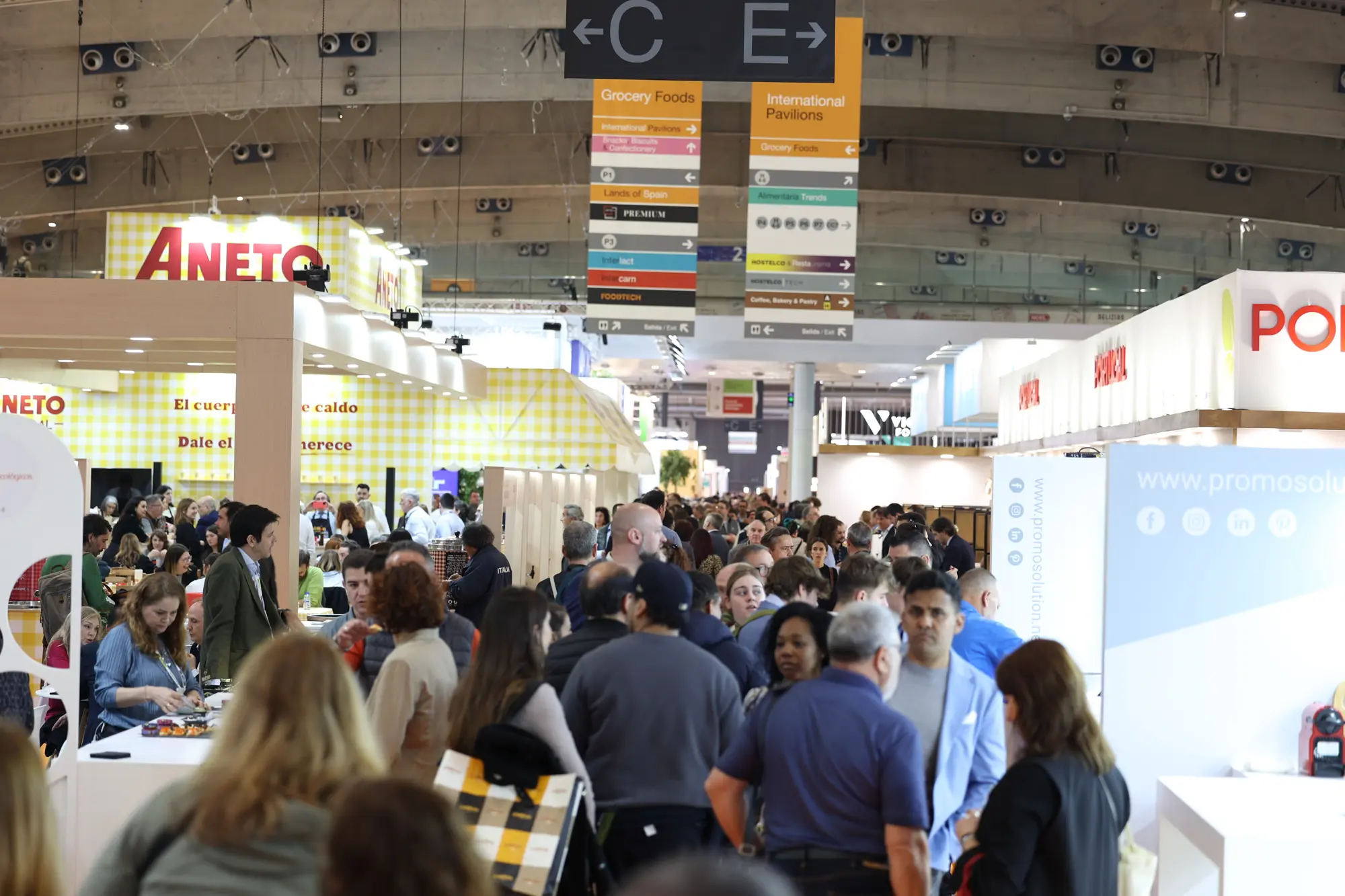
These events tend to be huge, so preparation is essential. Without a list of target buyers, you will spend most of your time wandering between halls without reaching the conversations that matter.
On top of that, the buyer-seller dynamic is very pronounced. Many fairs organize meeting agendas and hosted buyer programs. If you do not prepare your agenda in advance, you can miss the most valuable opportunities.
How to Prepare a Food Event
Before you travel, it is worth knowing which companies will be there and which ones match your ideal customer profile, gathering that information with time to spare, since getting the attendee list is the most labor-intensive part, and arriving with scheduled meetings. Our trade show preparation checklist works as a step-by-step guide.
Find and Prioritize the Right Companies
The challenge in the food sector is not a lack of events, but arriving at each one knowing which buyers and distributors are worth seeing. At shows with thousands of exhibitors, time slips away locating the few that genuinely fit you.
At DataOrigin we solve that by identifying, for each event in the sector, which companies match your ideal customer profile by sector, size, and country. So you arrive with a prioritized list and spend the show days on the conversations that matter.
This guide is part of our series on business events by sector. Explore our event directory or contact us to see how to prepare your next food and beverage show with data on your side.